
The Timeless Art of Hand Block Printing: Why Artisanal Craftsmanship Matters for Your Newborn
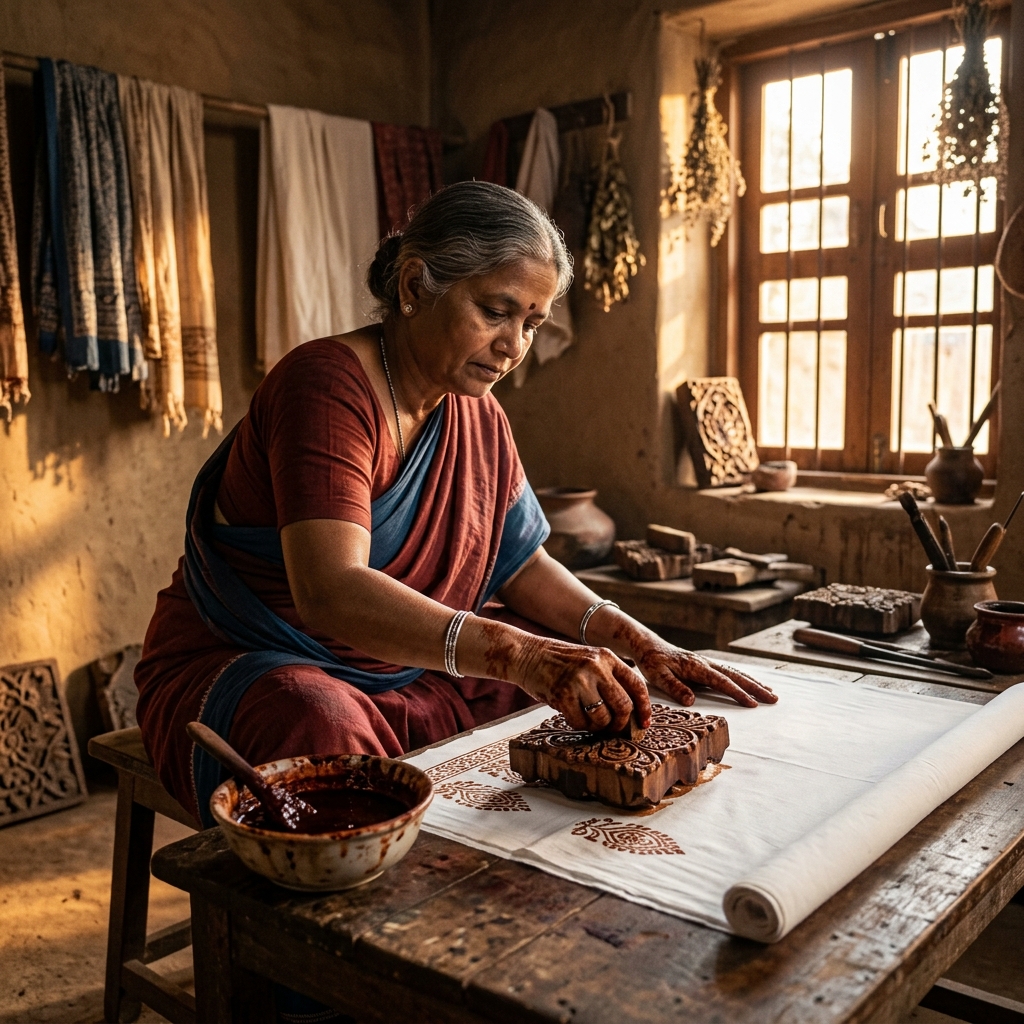
There is a moment, sometime during those quiet early weeks, when a new parent holds their sleeping newborn and becomes almost unbearably aware of how fragile, how astonishingly new, that small body is. Everything that touches their skin suddenly matters. Every fabric. Every thread. Every molecule of dye that gave that thread its color.
It was this awareness—this visceral, primal need to protect—that led us to the ancient textile workshops of Rajasthan. What we found there was not simply a method of printing fabric. It was a philosophy of care that has endured, unbroken, for over eight hundred years.
Hand block printing is one of the oldest and most revered textile arts in human civilization. And for parents who have begun to question the safety of mass-produced baby products, understanding this craft is not merely interesting—it is essential.
A Craft Born in the Desert Kingdoms
The art of hand block printing traces its documented origins to the 12th century, in the arid desert state of Rajasthan, India. Specifically, the twin epicenters of this tradition—Jaipur and the quieter village of Sanganer—have served as the cultural wellspring from which virtually all modern Indian textile printing descends.
In these early centuries, block printing was not a commercial industry. It was a royal commission. The Maharajas of Rajasthan patronized clans of specialized artisans known as "Chhipas"—a hereditary caste of printers who guarded their techniques with the secrecy of alchemists. The dye formulas, the carving methods, the precise mordant recipes that locked color permanently into cotton fibers—all of this was transmitted orally, from father to son, in an unbroken chain of knowledge that no empire, no invasion, and no industrial revolution has managed to sever.
What made these textiles so treasured by royalty was precisely what makes them so valuable for your baby today: purity. The Chhipas never used synthetic materials—because none existed. Their palette came from the earth. Their tools came from the forest. And their fabrics came from the cotton fields that stretched across the Indian subcontinent like a second sky.
The Painstaking Journey from Tree to Textile
To truly appreciate a SwaddleShawls piece—to understand why it feels different against your baby's skin, why it softens rather than stiffens with each wash, why its colors deepen rather than fade—you must first understand the extraordinary journey of its creation.
Phase One: The Carving of the Block
Every pattern begins as a sketch, drawn by hand onto paper using geometric principles passed down through generations. Once the design is finalized, it is transferred onto a block of seasoned teak wood—chosen specifically for its density, its resistance to moisture, and its ability to hold fine detail without splintering under repeated impact.
The master carver, known as the "Kharadi," then begins the slow, meditative work of chipping away the negative space. Using hand-forged chisels no wider than a few millimeters, the Kharadi removes everything that is not the pattern, leaving behind raised ridges of wood that will carry the dye to the fabric. A single block for a complex paisley or floral motif can take three to five days to complete. A single slip of the chisel—one moment of broken concentration—and the entire block must be discarded and started again from raw timber.
Phase Two: Preparing the Cloth
While the blocks are being carved, the fabric undergoes its own transformation. Raw cotton is scoured multiple times in clean water to remove natural oils, then soaked in organic mordants—mineral compounds like alum, myrobalan, and iron—that serve as molecular bridges between fiber and dye. Without this mordanting step, vegetable dyes would simply wash out. With it, they become essentially permanent, locked into the architecture of the cotton itself.
The prepared fabric is then stretched across long, padded printing tables, pinned taut, and smoothed by hand. The surface must be perfectly flat. Any wrinkle, any fold, any unevenness in the table beneath will distort the pattern when the block is pressed down.
Phase Three: The Printing
And then, finally, the Chhipa sits down to print.
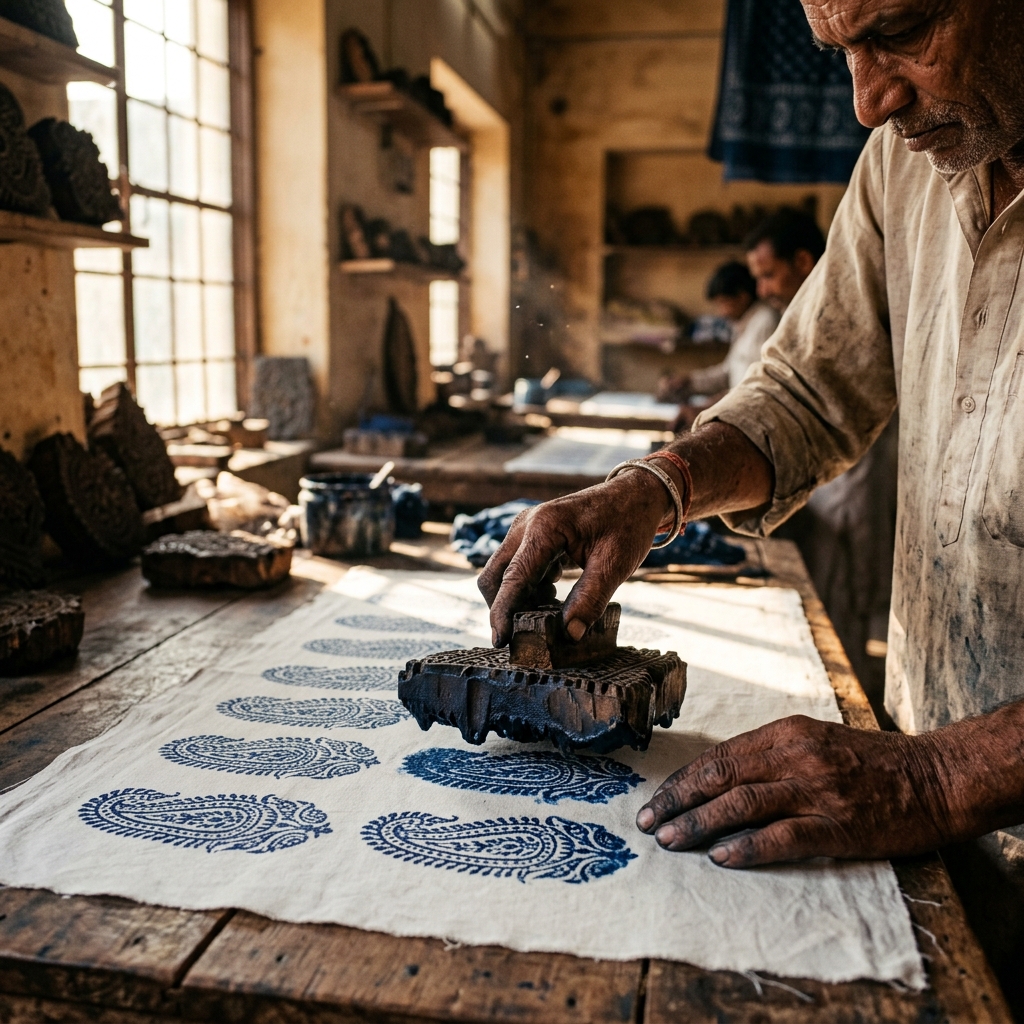
The carved teak block is dipped into a shallow tray of dye—a tray that the printer has mixed by hand that morning, using recipes memorized since childhood. The block is pressed firmly against the fabric. A sharp, decisive tap with the heel of the palm drives the dye into the cotton fibers. The block is lifted. The printer repositions, aligns by eye alone—no rulers, no laser guides, no registration marks—and stamps again.
A single swaddle-sized piece of fabric requires the printer to repeat this action anywhere from two hundred to five hundred times, depending on the complexity of the design. For multi-color patterns, each color requires its own block, its own dye tray, and its own complete pass across the entire fabric. A three-color design means the printer stamps the same piece of cloth over a thousand times.
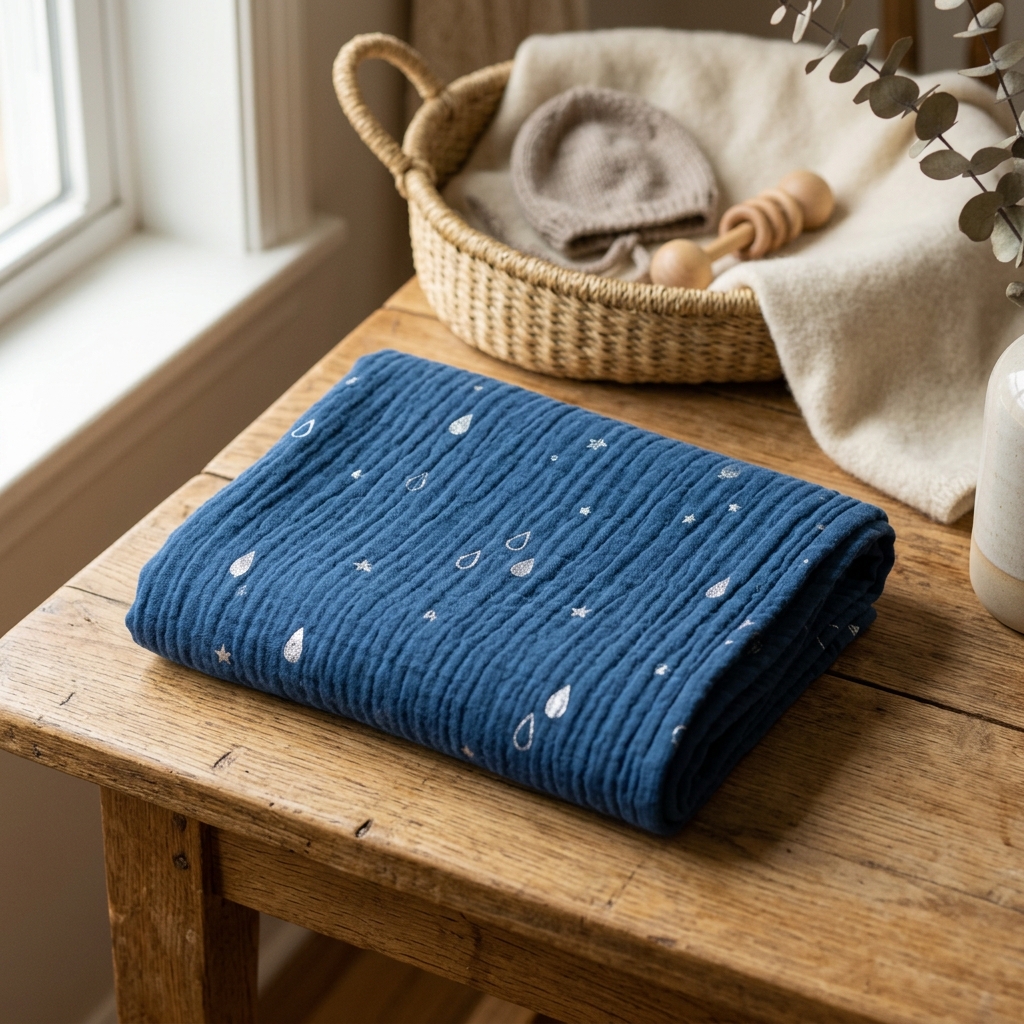
The Midnight Monsoon Swaddle
Deep indigo blue driven by natural indigo dyes, paired with delicate silver block-printed motifs resembling night stars.
No two shawls are mathematically identical. The slight variations in pressure, the almost imperceptible differences in how the dye saturates the cotton under the weight of a human hand—these are not imperfections. They are signatures. They are proof that a person, not a machine, made this for your child.— Krishna Patel, Artisanal Sourcing Director
The Chemistry of Color: Vegetable Dyes vs. Synthetic Petrochemicals
Let us be direct about something that the mass textile industry would prefer you not think about too carefully: the dyes used in conventional baby products are, in many cases, derived from the same petrochemical families as industrial solvents and plastic precursors.
The modern textile industry relies overwhelmingly on Azo-based synthetic dyes. These compounds are cheap to manufacture, extraordinarily vibrant, and can be applied to fabric with mechanical speed. They are also, according to extensive research documented by the European Chemicals Agency (ECHA), capable of releasing aromatic amines—several of which are classified as known or suspected carcinogens—through prolonged skin contact, particularly in the presence of moisture and heat.
Now consider the environment in which a newborn swaddle operates: wrapped tightly against warm, perspiring skin, often for hours at a stretch, frequently mouthed and sucked upon by an infant whose digestive and immune systems are still developing.
The calculus, when stated plainly, becomes impossible to ignore.
What Goes Into a Vegetable Dye
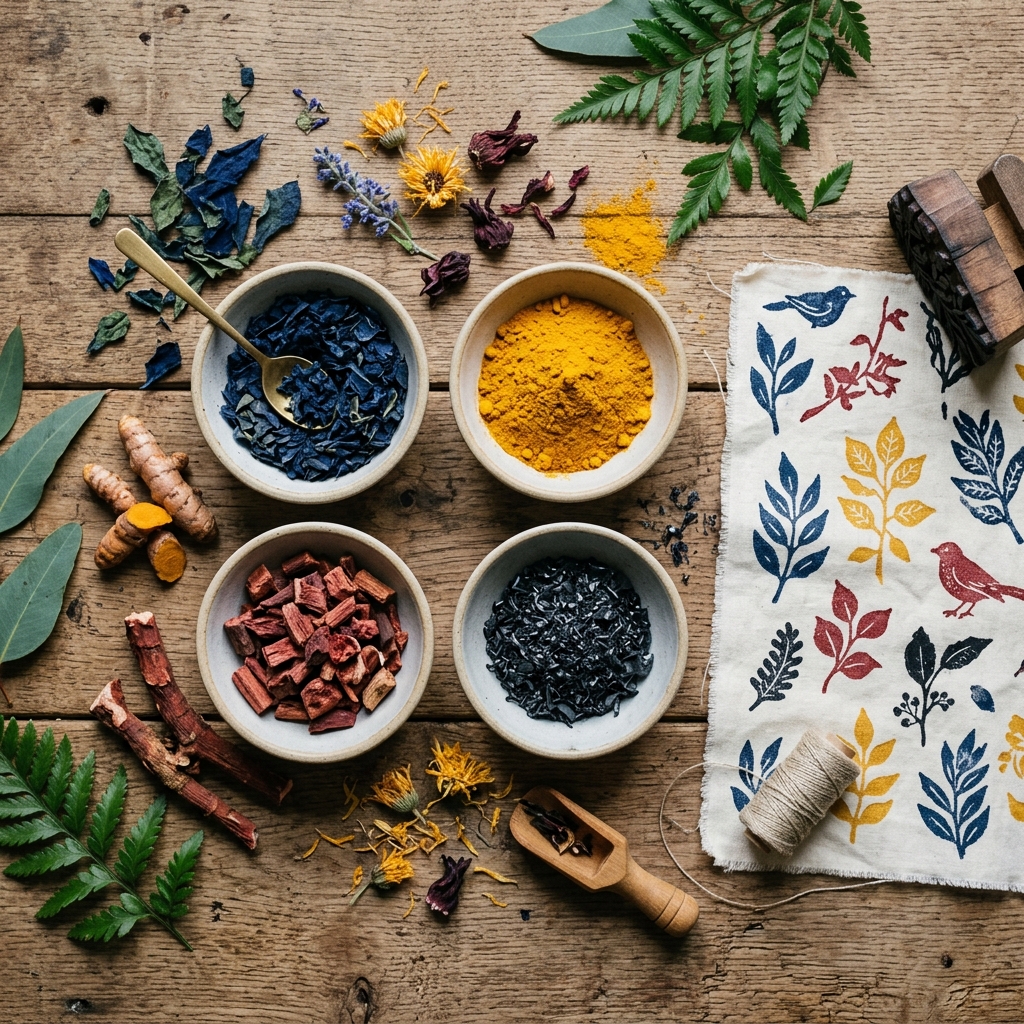
In contrast, authentic hand block printing utilizes dyes extracted exclusively from botanical and mineral sources:
- Indigo (Indigofera tinctoria) — Deep, luminous blues extracted from the fermented leaves of the indigo plant, cultivated across South Asia for millennia.
- Madder Root (Rubia tinctorum) — Rich, warm reds and terracottas derived from the root system of the madder plant, ground into fine powder.
- Turmeric (Curcuma longa) — Vibrant golden yellows from the same rhizome used in Indian cooking, prized for its natural antiseptic properties.
- Pomegranate Rind — Soft olive greens and warm ochres extracted from dried pomegranate fruit skins.
- Iron Shavings — When dissolved in solution, iron oxide creates deep, permanent blacks and charcoal grays without any synthetic chemistry.
These dyes are not merely "safe" in the regulatory sense. They are biocompatible. They belong to the same natural world as the skin they touch. Many of them—turmeric in particular—possess documented antiseptic, anti-inflammatory, and antimicrobial properties. Your baby is not merely protected from harmful chemicals; they are wrapped in substances that traditional Indian medicine has used for healing for thousands of years.

The Golden Lotus Shawl
Hand-block printed golden lotus motif on natural cream cotton. Dyed with turmeric and madder extracts.
The Environmental Imperative
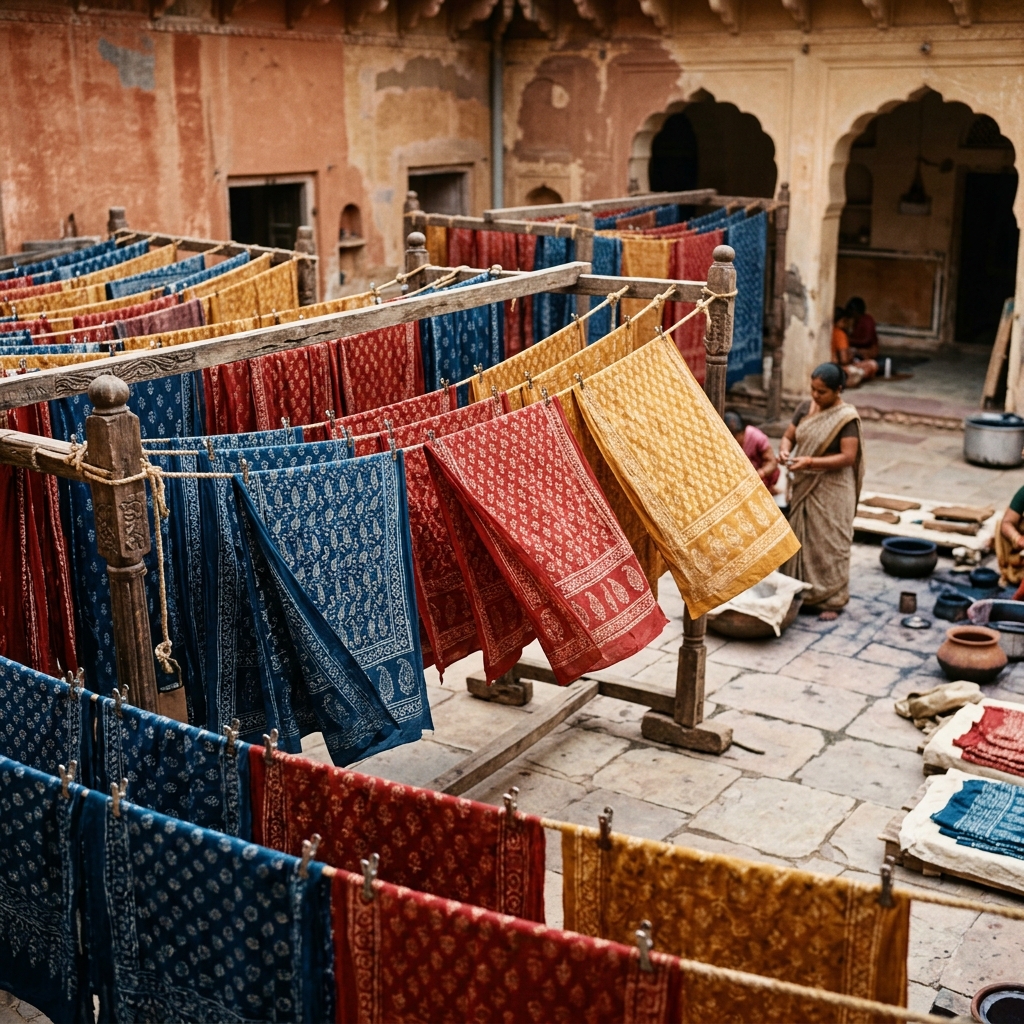
The benefits of this ancient process extend far beyond the nursery walls. The synthetic dye industry is one of the most ecologically destructive forces in modern manufacturing. The World Bank estimates that textile dyeing is responsible for approximately 20% of global industrial water pollution. Rivers adjacent to major dye factories in Southeast Asia have been documented running visibly blue, red, or black with untreated chemical discharge.
Artisanal vegetable dyeing represents a fundamentally different relationship with water. The dye baths use a fraction of the volume required by industrial processes. The runoff is organic—biodegradable plant matter and mineral residue that returns harmlessly to the soil. The fabrics are dried in open air, under sunlight, rather than in gas-fired industrial dryers. The entire process, from raw cotton to finished swaddle, maintains a carbon footprint that is orders of magnitude smaller than its factory-produced counterpart.
Furthermore, by purchasing artisanal textiles, you are directly funding the livelihoods of remote village craftsmen and their families—ensuring that this irreplaceable generational artistry is not driven into extinction by the economics of automated mass production.
Redefining Luxury for the Next Generation
We live in an age that often conflates luxury with logos, with price tags, with the performance of exclusivity. But there is an older definition of the word—one that the Chhipa artisans of Rajasthan understand instinctively—that has nothing to do with brand names and everything to do with care.
True luxury, in the context of your newborn, is the absolute certainty that the fabric touching their skin was carved and stamped by human hands. That the colors come from leaves and roots, not petroleum. That the cotton was prepared with the same patience and attention that you yourself bring to every feeding, every bath, every whispered lullaby in the dark hours of the morning.
That is what hand block printing means. Not a trend. Not a marketing angle. A living, breathing tradition of care that has survived eight hundred years because it is, simply and profoundly, the right way to make something for a child.
At SwaddleShawls, we do not merely sell fabric. We deliver a heritage. And every piece we create carries, in its fibers and its colors and its slight, beautiful imperfections, the unmistakable signature of love applied by hand.
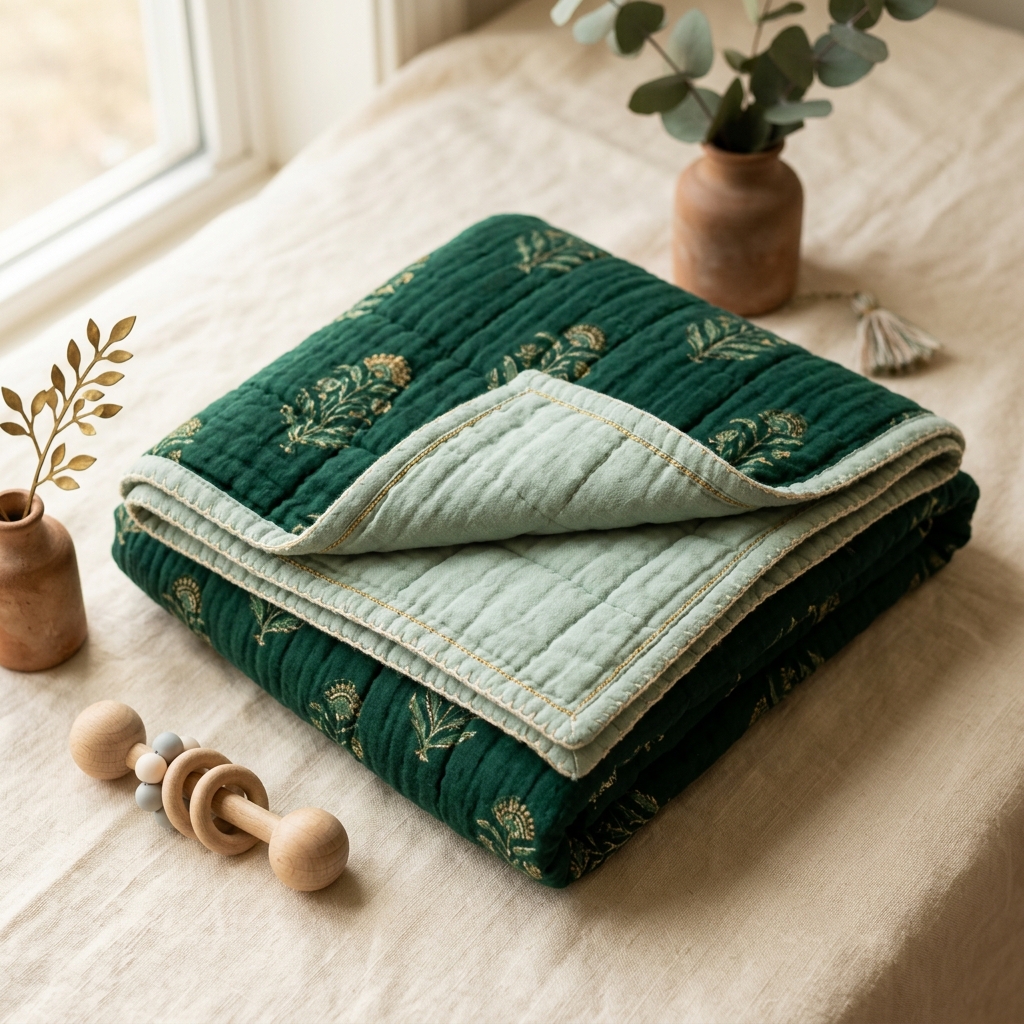
The Emerald Forest Winter Quilt
Reversible, hand-block printed emerald quilt. Two designs in one—the ultimate heritage keepsake.
Written By

Krishna Patel
With deep roots in generational fabric trading, Krishna bridges traditional Indian craftsmanship with modern sustainability standards. Dedicated to ethically sourced, artisanal block-printing and infant wellness.
Connect on LinkedIn