

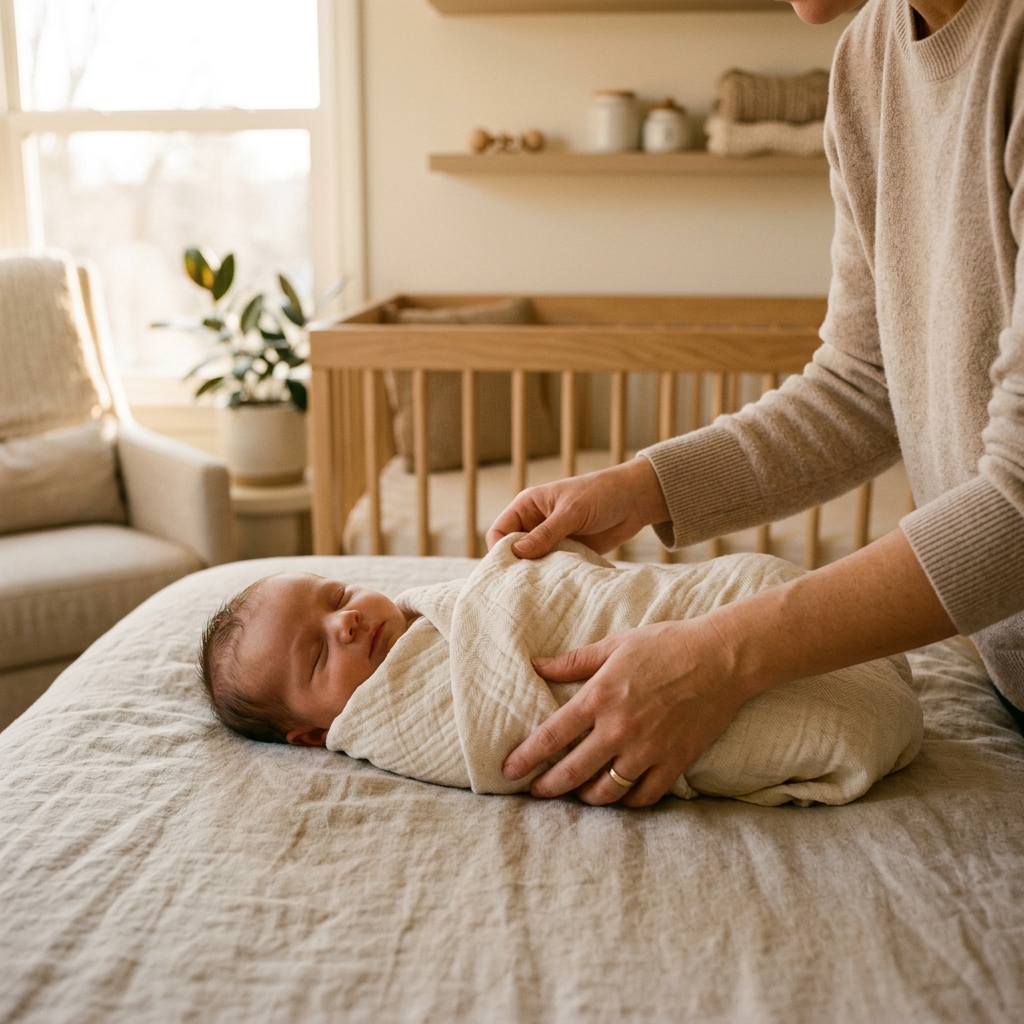
Swaddling is one of the oldest infant care practices in human history—and for good reason. When done correctly, it recreates the snug, enclosed sensation of the womb, calming the startle reflex (the Moro reflex) that jolts newborns awake dozens of times per night. A well-swaddled baby sleeps longer, cries less, and transitions more peacefully through sleep cycles.
But swaddling incorrectly—too loosely, too tightly, with the wrong fabric, or for too long into development—can create genuine safety risks. This guide will walk you through the technique step by step, explain the science behind why it works, and help you understand the critical safety boundaries that every parent should know.
Why Swaddling Works: The Science of the Startle Reflex
Newborns are born with a primitive neurological response called the Moro reflex. When a baby senses a sudden change in support—a noise, a sensation of falling, even a shift in their own body position—their arms fling outward, their fingers splay, and they gasp. This reflex is involuntary. It is hardwired into the brainstem as an ancient survival mechanism.
The problem is that the Moro reflex fires constantly during light sleep, and newborns spend a significant portion of their sleep time in light sleep stages. Every time the reflex triggers, the baby wakes—often crying, often difficult to resettle. For exhausted parents, this cycle can feel relentless and demoralizing.
Swaddling interrupts this cycle by gently restraining the arms. When the Moro reflex fires, the baby's arms press against the fabric rather than flinging into open space. The brain registers resistance rather than freefall, and the reflex dissipates without triggering a full awakening. The baby stays asleep. The parents stay sane.
Choosing the Right Swaddle Fabric
Before you learn the fold, you need to choose the right material. This decision is not cosmetic—it directly impacts your baby's thermal safety.
- Muslin cotton (open weave): The gold standard for swaddling. Breathable, thermoregulating, and increasingly soft with every wash. Prevents overheating while maintaining a secure wrap.
- Traditional cotton (dense weave): Suitable for cooler environments only. Can trap heat against the skin in warm rooms. Monitor your baby's temperature carefully.
- Bamboo blends: Extremely soft with natural moisture-wicking properties. Slightly more slippery than cotton, which can make maintaining a tight swaddle more challenging.
- Polyester/fleece: Not recommended for swaddling under any circumstances. Traps heat, sheds microplastics, and does not breathe. Reserve synthetic fabrics for outer layers in cold weather only.
The ideal swaddle blanket is large (at least 47 x 47 inches for a full-term newborn), lightweight, and made from 100% natural fibers. Larger blankets provide more fabric to work with, resulting in a more secure wrap that is less likely to come undone during sleep.
The Simplicity Heritage Shawl
47x47 inches of open-weave breathable cotton. The perfect size and weight for a secure, safe swaddle.
The Diamond Fold: Step by Step
The diamond fold is the most widely recommended swaddling technique by pediatric nurses and sleep consultants. It produces a secure, symmetrical wrap that stays in place through multiple sleep cycles while allowing proper hip positioning.
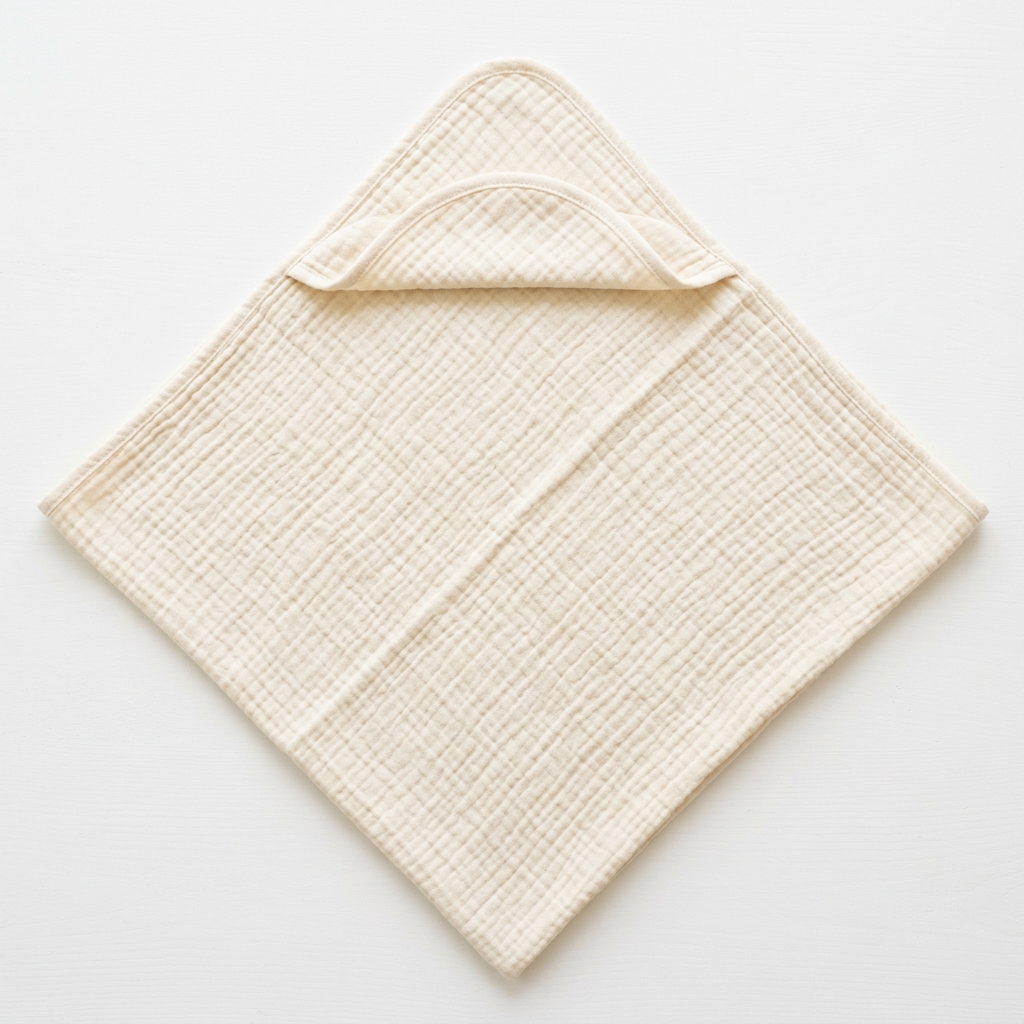
Step 1: Prepare the Blanket
Lay your swaddle blanket flat on a firm surface in a diamond orientation—one corner pointing up, one pointing down, and one to each side. Fold the top corner down approximately 6 inches to create a straight edge. This fold creates the neckline where your baby's shoulders will rest.
Step 2: Position the Baby
Place your baby face-up on the blanket with their shoulders aligned with the folded edge. Their head should rest above the fold, completely free of the fabric. The baby's neck and face must never be covered by the swaddle material.
Step 3: The First Wrap
Take the left corner of the blanket. Gently straighten your baby's left arm against their side. Pull the fabric snugly across their chest and tuck it firmly beneath their right side, threading it under their body. The fabric should be smooth and taut—not bunched. The arm should be comfortably restrained but not compressed.
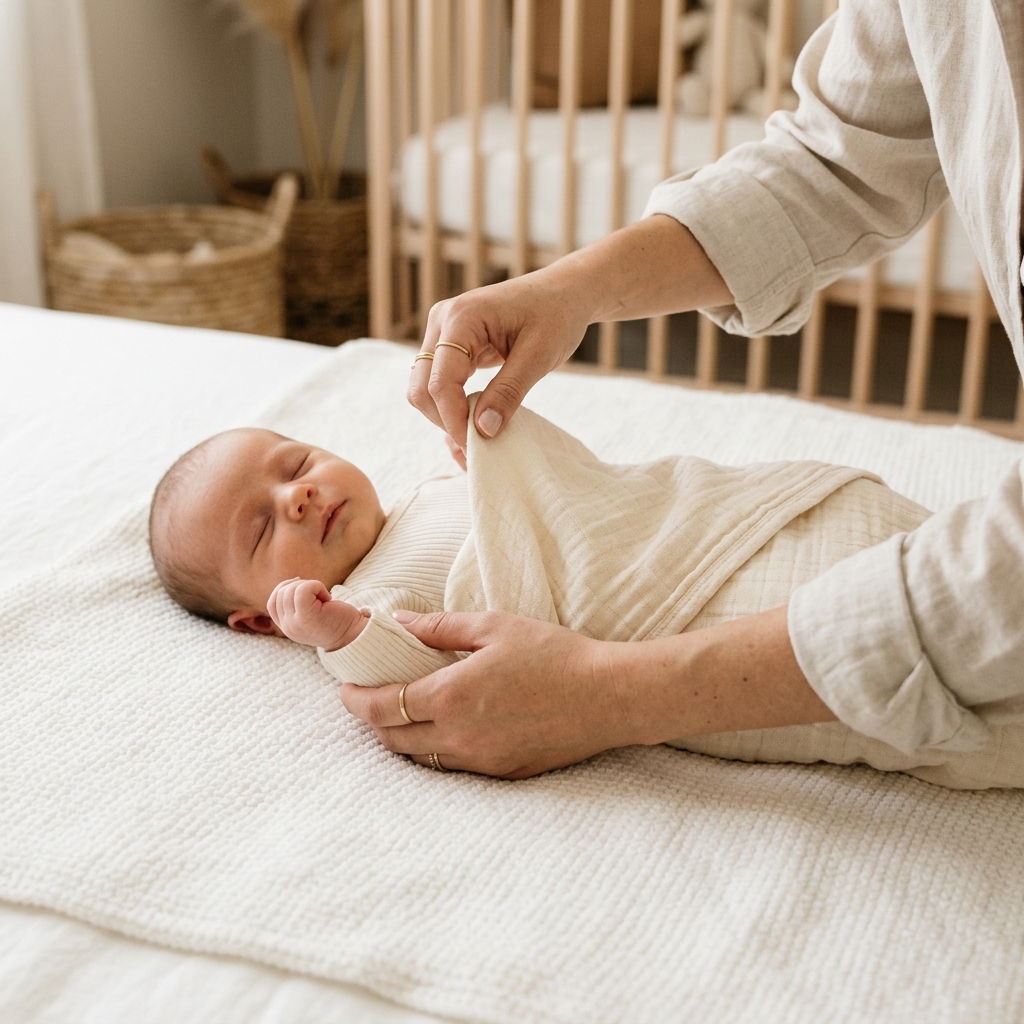
Step 4: The Bottom Fold
Take the bottom corner of the blanket and fold it upward, over the baby's feet and toward their chest. Tuck the excess fabric behind the baby's left shoulder. Important: leave enough room in this fold for your baby's legs to bend naturally at the hip. The swaddle should be snug around the arms and chest but loose around the hips and legs. The International Hip Dysplasia Institute specifically recommends that swaddled babies should be able to bend their legs upward and outward freely.
Step 5: The Final Wrap
Take the remaining right corner. Straighten your baby's right arm against their side. Pull the fabric across their chest—over the first layer—and wrap it around their body, tucking the tail securely behind their back. Test the swaddle: you should be able to slip two fingers between the fabric and your baby's chest. If you can't, it's too tight. If you can fit your whole hand, it's too loose and will come undone.
Critical Safety Guidelines
Swaddling, when practiced correctly, is safe and beneficial. But there are non-negotiable boundaries that every parent must respect:
- Always place a swaddled baby on their back to sleep. Never on their stomach or side.
- Stop swaddling immediately when your baby shows signs of rolling over—typically between 2 and 4 months. A swaddled baby who rolls onto their stomach cannot use their arms to reposition, creating a suffocation risk.
- Never cover your baby's face or neck with the swaddle fabric.
- Monitor the room temperature. A swaddled baby in a warm room is at heightened risk of overheating. The ideal nursery temperature is 68–72°F (20–22°C).
- Use breathable, natural fabrics only. Synthetic swaddle materials trap heat and increase overheating risk.
- Ensure the swaddle is loose around the hips. Tight swaddling of the legs can contribute to hip dysplasia.
A swaddle is not a restraint. It is a gentle boundary—a fabric embrace that tells a newborn, in the only language they understand, that they are held, that they are safe, that the vast, startling world outside the womb has limits and softness and warmth.— Krishna Patel, SwaddleShawls
When to Stop Swaddling
The transition away from swaddling is one of the most anxiety-inducing milestones for new parents. The baby has been sleeping beautifully in their cozy wrap, and the thought of removing it feels like dismantling the only thing that works.
The signal is clear and non-negotiable: when your baby begins attempting to roll from back to front, swaddling must stop. For most babies, this occurs between 8 and 16 weeks. Some early developers show rolling signs as young as 6 weeks. Watch for increased hip mobility, arching of the back, and deliberate weight-shifting during tummy time.
The transition doesn't have to be abrupt. Many parents successfully use a phased approach: first, swaddle with one arm out for several nights. Then both arms out, with the blanket still wrapped around the torso. Then transition to a sleep sack or wearable blanket. The SwaddleShawls pieces, with their generous 47-inch dimensions, work beautifully as a light sleep sack layer even after the traditional swaddling phase has ended.
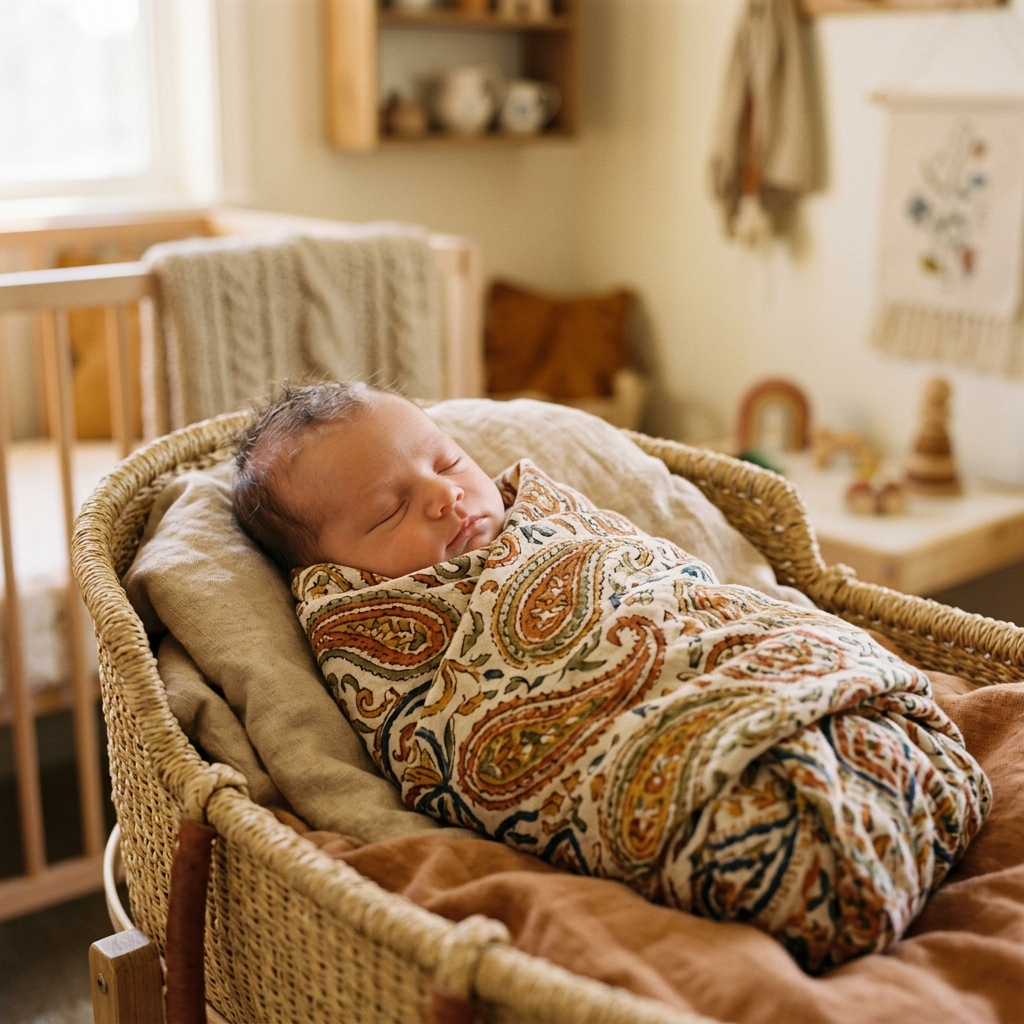
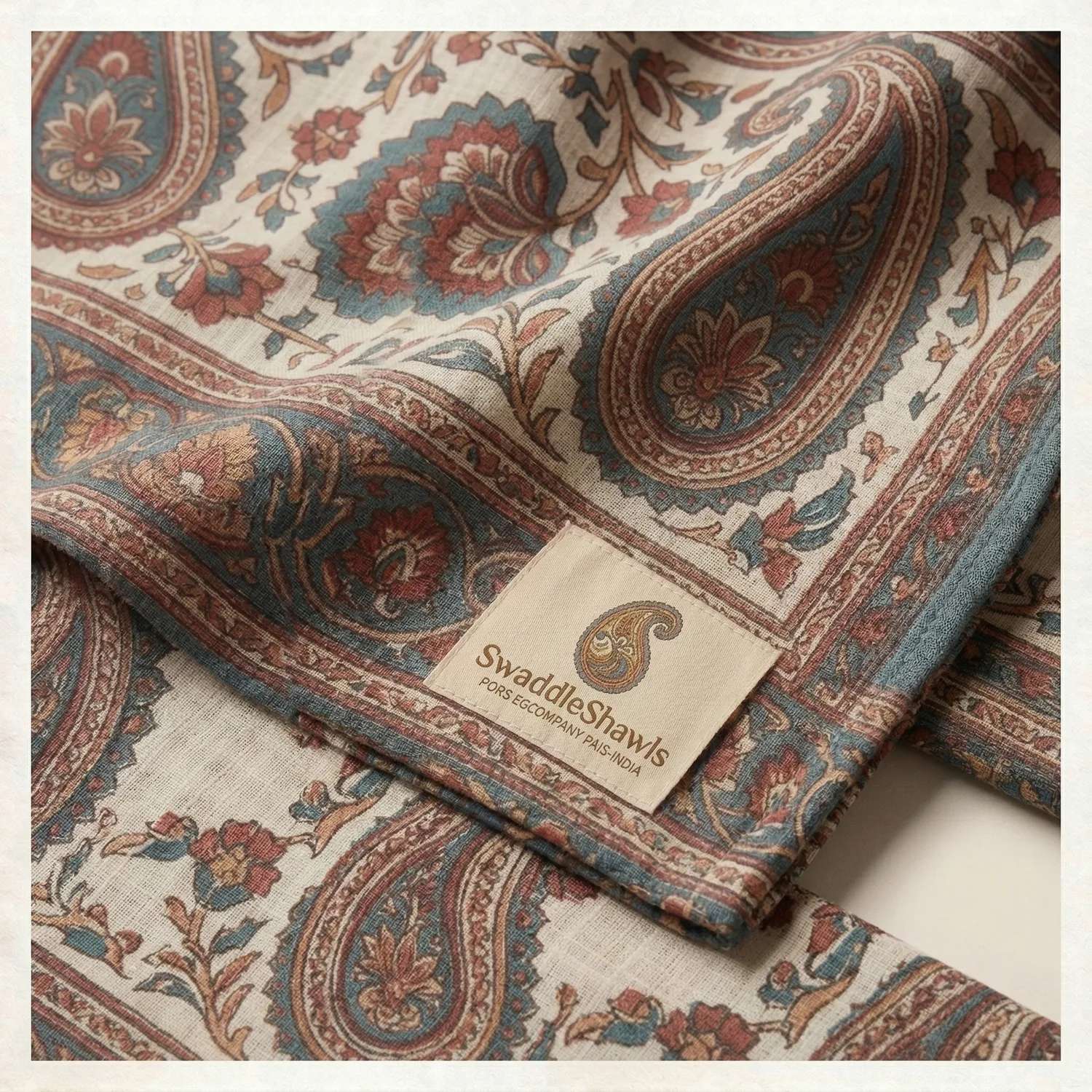
The Heritage Paisley Swaddle
Generously sized at 47x47 inches. Perfect for the diamond fold technique and beautiful enough to frame.
Written By

Krishna Patel
With deep roots in generational fabric trading, Krishna bridges traditional Indian craftsmanship with modern sustainability standards. Dedicated to ethically sourced, artisanal block-printing and infant wellness.
Connect on LinkedIn